If you are researching external wall insulation examples to see how the upgrade could work for your own home, it helps to look at real projects and understand what different systems can achieve. External wall insulation adds an insulating and protective layer to the outside of your property, reducing heat loss, improving comfort, and renewing the appearance of the building. With more than eight million solid wall homes in the UK still uninsulated, the potential for improvement is substantial.
Below, we explore clear examples of how external wall insulation works across different homes, finishes, and retrofit goals.
How external wall insulation fits into these examples
External wall insulation adds an insulating layer to the outside of a property before it is finished with render, brick slips or cladding. The examples below focus on how those systems can be applied to different property types, finishes and retrofit goals.
For a full explanation of how external wall insulation works, its benefits, suitability and installation process, see our main external wall insulation guide.
External wall insulation examples for different property types

Victorian and Edwardian solid wall houses
External wall insulation is particularly effective for Victorian and Edwardian homes with solid brick walls that lose heat quickly. Installers fix insulation boards directly to the masonry and apply either render or brick slips, allowing you to retain a traditional appearance or choose a more modern look. Upgrading these walls can reduce heat loss significantly and help prevent cold internal surfaces and condensation.
1930s semis and mid-century homes 
External wall insulation works well for 1930s and mid-century houses that have cavity walls but little or no insulation. When cavity insulation is unsuitable or insufficient, insulation boards can be added to the exterior and finished with coloured render. This creates a cleaner, uniform façade while improving thermal performance.
 Bungalows
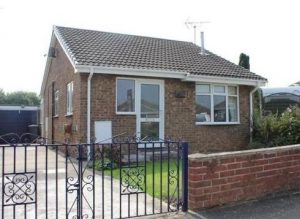
Bungalows often have more exposed wall area relative to their floor area, which means external wall insulation can have a noticeable impact on comfort and warmth. Adding insulation and a render or cladding finish helps stabilise temperatures throughout the home and can be especially effective when paired with upgraded loft insulation.
 Flats and apartment blocks
External wall insulation is commonly used on both low-rise and high-rise blocks because it can be installed from the outside with minimal disruption to residents. The system is applied over existing façades and finished with modern render or cladding. This improves thermal performance across the building and can reduce heating demand for communal systems.
External wall insulation examples based on different finishes
Render finishes
Render is one of the most popular finishes for external wall insulation. It comes in smooth, textured, or silicone-enhanced options and a wide choice of colours. Render is low maintenance, suitable for most property types, and often chosen when homeowners want a clean, modern finish.
Brick slips
Brick slips are thin brick tiles fixed over the insulation to replicate traditional brickwork. They are ideal where planning rules or personal preference require a brick appearance. With many colours and textures available, they allow you to improve efficiency while keeping the character of a brick façade.
Timber-effect or composite cladding
Timber-effect or composite panels can be fitted over insulation to create a contemporary look. These products are engineered for weather resistance and low maintenance and are often combined with render to introduce contrast or break up larger elevations.
Stone-effect panels
Stone-effect panels provide the appearance of natural stone in a lighter, easier-to-install format. They are suitable for cottages, rural properties, or homes where a textured, high-quality exterior is desired.
External wall insulation examples that solve common problems
 Reducing cold internal walls
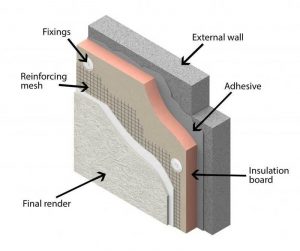
Wrapping a property in external insulation raises internal wall temperatures. It can help your home feel warmer and lower the likelihood of condensation and mould.
Eliminating draughts and cold spots
External insulation helps to close small gaps in older masonry and creates a continuous thermal layer. This reduces draughts and minimises cold spots around junctions and window reveals.
Improving EPC ratings
 Upgrading wall insulation can significantly improve a property’s EPC rating because walls are one of the largest sources of heat loss. Better ratings can benefit homeowners, landlords, and future resale value.
Modernising tired exteriors
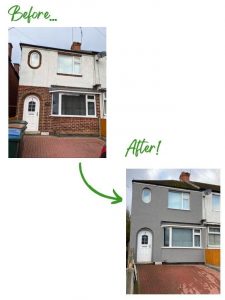
If your home has cracked render, faded paint, or uneven walls, external wall insulation provides an opportunity to correct defects and achieve a refreshed, modern finish.
What to consider before installing external wall insulation
Thickness and appearance
External wall insulation usually adds between 60 mm and 200 mm to the outside of the wall, depending on the insulation type and the target U-value. Installers will advise on how window reveals, sills, and eaves should be adjusted to maintain a consistent, attractive appearance.
Planning permission
Most homes do not require planning permission for external wall insulation, although it is needed for listed buildings, conservation areas, or where the appearance changes significantly. An experienced installer will help clarify any local requirements.
Cost and timescale
Costs vary depending on property size, insulation material, and chosen finish. Most homes are completed within one to three weeks, and installations can be carried out throughout the year.
Pulling it all together: choosing the right external wall insulation system
The best external wall insulation system for your home depends on your wall construction, target energy performance, and the finish you want to achieve. Whether you prefer a smooth render, a traditional brick appearance, or a contemporary cladding style, some options will improve comfort, reduce energy loss, and enhance kerb appeal.
Ready to explore external wall insulation for your home?
If you want to see how external wall insulation could transform your property or you are ready to plan your own upgrade, we are here to help at ecoinsulation.co.uk. Connect with trusted installers and book a quote for a warmer, more efficient, and better-looking home.