If you are exploring external wall lights while planning or upgrading your insulation, you might be wondering how the two work together. External wall lights are a brilliant way to improve safety, kerb appeal, and outdoor usability, and the good news is that they can be safely installed even if your home has external wall insulation.
External wall insulation adds a protective, insulating layer to the outside of your walls, and it doesn’t necessarily affect your outdoor lights, so you can enjoy better warmth, reduced heat loss and a more comfortable home all year round.
External wall insulation and external wall lights may need careful planning
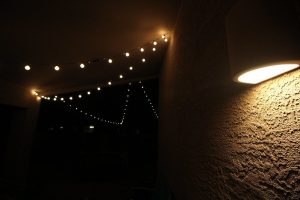
External wall insulation and external wall lights need careful planning because the insulation adds thickness to your exterior walls, affecting how lights and other fixtures are mounted. Most insulation systems add between 60mm and 200mm of depth, depending on the chosen material and the thermal performance you want to achieve. If you already have external wall lights or plan to install new ones, you need to consider how they will be fixed securely, whether existing wiring needs to be extended and whether the design of the light fitting suits the new wall.
Professional installers are used to these considerations. They can use insulated mounting pattress plates, extended fixings or dedicated metal plates to ensure the lights remain stable and weatherproof. When this is done correctly, the insulation stays sealed and effective, and the lighting appears as though it has always been part of the design.
The benefits of external wall lights on a well-insulated home
External wall lights offer several practical and aesthetic benefits when paired with external wall insulation.
Improved safety and visibility
External wall lights improve safety and visibility by illuminating paths, steps, driveways and entrances, helping you navigate outdoor areas during darker evenings. This is particularly important in the UK, where winter daylight hours are limited. Good lighting reduces the risk of trips and slips and makes arriving home after dark more comfortable.
Enhanced kerb appeal
External wall lights enhance kerb appeal by giving your home a warm, inviting appearance after dark. Well-placed lighting can highlight new render or cladding, frame your front door and emphasise architectural features such as bay windows or stonework. Combined with external wall insulation, which already refreshes your home’s appearance, lighting can give an older property a smarter and more modern look.
Better outdoor living
External wall lights improve outdoor living by making gardens, patios and seating areas more usable later into the evening.
Energy efficiency through LEDs
LEDs use far less electricity and last significantly longer than older halogen or incandescent bulbs. When paired with external wall insulation that reduces heat loss through your walls, the result is a home that is cheaper to run and more comfortable throughout the year.
How to install external wall lights with external wall insulation
You can install external wall lights safely with external wall insulation by using suitable fixings, careful sealing and good coordination between trades. Planning the lighting at the same time as the insulation project often produces the best results, as wiring routes, junction boxes and mounting positions can be agreed in advance.
Key steps professionals typically follow include:
- Plan wiring routes before insulation is applied.
Electricians may install conduits or junction boxes on the masonry so that cables remain protected once the insulation and render are in place. - Use specialist support fixings.
Light brackets are anchored into the solid wall behind the insulation using long fixings or appropriate anchor systems, rather than fixing directly into the insulation layer. - Maintain the insulation’s waterproof layer.
Installers seal around the fixture bracket and cable penetrations to prevent rainwater from tracking behind the insulation and causing dampness. - Use mounting blocks when required.
Purpose-made blocks or pattresses provide a level, strong surface for the fitting and help it sit neatly against the finished render or cladding. - Confirm positions before the final render.
Light locations are checked and tested before the decorative coat is applied, preventing the need to cut into the insulation later.
These steps ensure that external wall lights and insulation work together without compromising each other’s performance.
Do external wall lights affect insulation performance?
External wall lights do not affect insulation performance when they are installed correctly with properly sealed fixings. Any penetrations for cables or screws are kept to a minimum and sealed with suitable gaskets or sealants to maintain airtightness and weather protection. When this detailing is completed to a good standard, the insulation continues to reduce heat loss and protect against moisture as intended.
Choosing the right external wall lights for your property
 Choosing the right external wall lights means selecting fixtures that are safe, efficient and compatible with insulated walls. LED fittings help keep electricity use low and reduce maintenance. Products with an IP44 rating or higher are recommended for protection against rain and dust. It is also useful to choose lights with a flat backplate so they sit neatly against mounting blocks, and a design that complements your new render or cladding. Features such as motion sensors or dusk-to-dawn controls can also help reduce energy use by ensuring lights only operate when needed.
Bringing insulation and lighting together
Bringing insulation and lighting together is easiest when they are considered together. If you know you want external wall lights before insulation is installed, your insulation installer and electrician can coordinate wiring routes, junction boxes and fixing positions to ensure everything is ready before the final render. If your home already has external wall insulation in place, a competent electrician can still install new lights by using long fixings, pattresses and careful sealing to protect the insulation system.
Ready to combine external wall lights and insulation?
External wall lights and insulation work perfectly together, giving you a warmer, more efficient home with safer paths, more usable outdoor spaces and a more attractive exterior. If you are ready to explore insulation or want advice on combining it with external wall lights, you can connect with trusted, experienced installers through Eco Insulation.
Visit https://ecoinsulation.co.uk/ to book a quote and start planning an upgrade that improves both your home’s energy performance and its kerb appeal.